Multimedia Museum of Stalag IB Hohenstein and the History of Olsztynek in Olsztynek
General Information
The Multimedia Museum of Stalag IB Hohenstein and the History of Olsztynek is an institution of a historical and martyrological character. It was established in order to document and cultivate the memory of one of the largest prisoner-of-war concentration camps from the period of the Second World War in Europe.
Location
The Multimedia Museum of the Prisoner-of-War Camp Stalag IB and the History of Olsztynek is located at 1 Ratusz Street.
History
Before the establishment of the museum
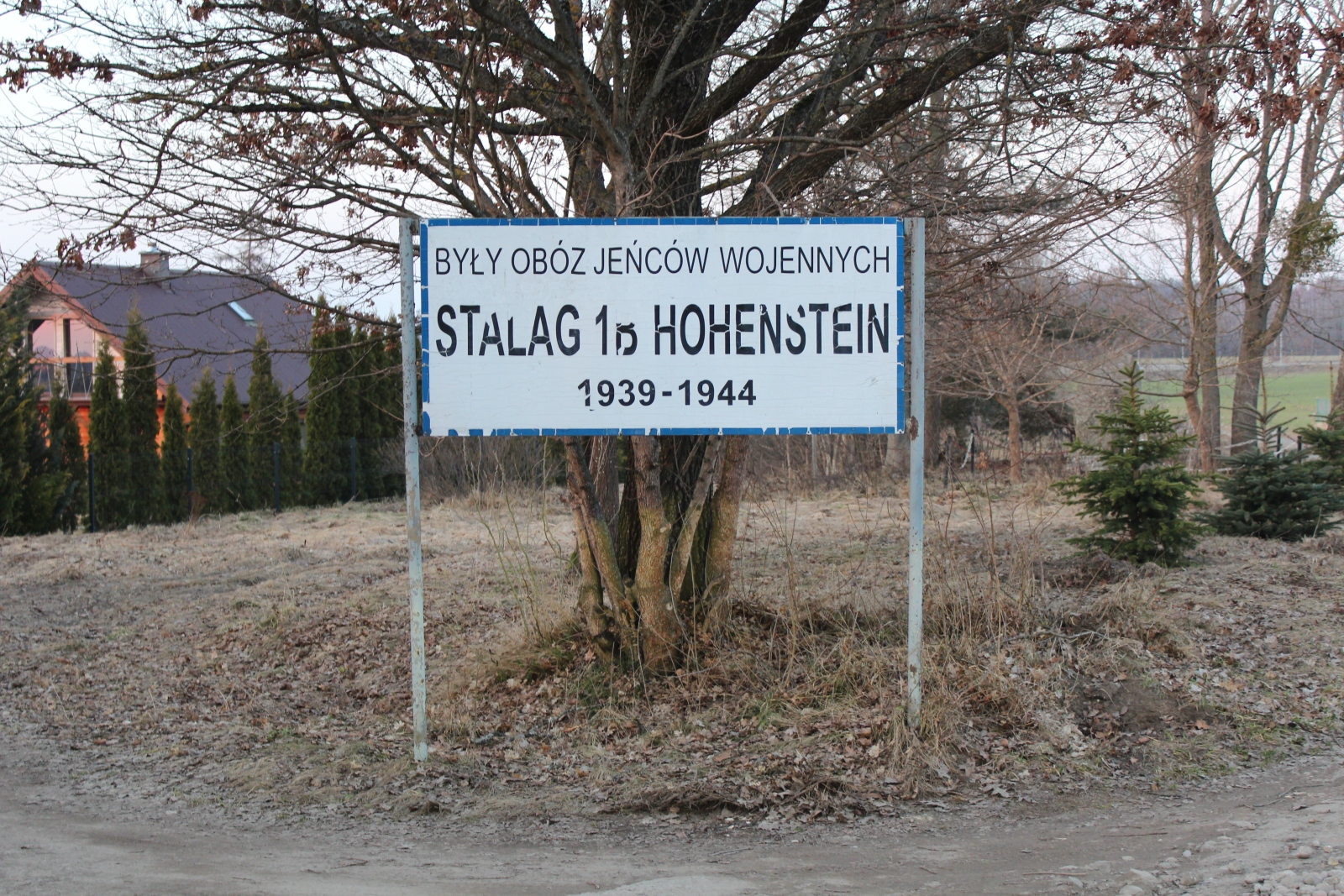
The museum tells a story directly connected with the monumental memorial of the Battle of Tannenberg of 1914, the Tannenberg-Denkmal, which was situated near Olsztynek, in present-day Królikowo. In 1939, even before the outbreak of the Second World War, the German Wehrmacht established a prisoner-of-war camp, using field infrastructure near Królikowo that had previously been used during mass ceremonies at the Tannenberg memorial. Initially, it was a transit camp – Dulag – and in October 1939 it was transformed into a permanent camp – Stalag IB Hohenstein. The first prisoners of the camp were Polish soldiers taken captive during the September Campaign of 1939, including the defenders of Westerplatte and Modlin. In subsequent years, soldiers from almost all over Europe and the world were sent to the camp – French, Belgians, British, Italians (after 1943), Soviet prisoners of war (after 1941), and people of other nationalities. In the winter of 1941/1942, a typhus epidemic broke out in the camp, decimating the prisoners. In January 1945, the Germans evacuated the camp, forming the so-called death marches, during which many extremely exhausted prisoners died.
There is still a lack of reliable data regarding how many prisoners were held in the camp. It is estimated that at one time there were from 40 to 55 thousand prisoners there, and some researchers give a figure of over 60 thousand people. The difficulty in determining exact numerical data is connected with the fact that it was a transit camp. Hence the differences in determining the total number of prisoners – this ranges from 200 to as many as 650 thousand. However, the figure of 250 thousand detained persons is generally accepted. It is estimated that as a result of disease, hunger, exhaustion, and executions, about 50 to 55 thousand people lost their lives there, mainly citizens of the USSR and Poland. The victims were buried in mass graves in the nearby cemetery in Sudwa.
Establishment of the museum
The Multimedia Museum of the Prisoner-of-War Camp Stalag IB Hohenstein and the History of Olsztynek began its activity on 26 June 2015 on the top floor of the Olsztynek town hall, and its inauguration gathered representatives of state and local authorities as well as numerous guests. This modern institution commemorates the second largest prisoner-of-war camp in East Prussia and presents the history of the town of Olsztynek.
The institution quickly attracted the attention of both residents and tourists from all over the world and gained recognition in Poland – among other distinctions, it took first place in a nationwide plebiscite organised by the kulturaonline.pl service and received a certificate and medal from the Marshal of the Warmian-Masurian Voivodeship for the promotion of the region.
The museum uses modern technologies, multimedia presentations, archival photographs, maps, and original sources such as letters and diaries to tell two main historical threads. The first room is devoted to the history of Olsztynek itself – from the times of the Prussian tribes, through the Middle Ages, up to the present – and presents, among other things, archaeological finds and the tourist values of the town and commune. The second room concentrates on the history of the First World War and its consequences for the region and, above all, on the fate of prisoners in Stalag IB Hohenstein, operating in the years 1939-1945. The museum shows the appearance of a camp barrack, the equipment, and the martyrdom of the prisoners, also drawing on the accounts and memories of former inmates, which gives the exhibition a personal and educational dimension. Among the exhibits there are, among others, identification tags, footwear, vessels, and medical tools. The museum also carries out educational activities and international cooperation in order to document the fate of prisoners.
The Multimedia Museum of Stalag IB and the History of Olsztynek has become an important centre of memory and historical education, presenting the difficult events of the twentieth century and the history of the town itself in an attractive and reflective form.
Bibliography
- Bałdowski Jan, "Warmia, Mazury, Suwalszczyzna: A Guide", Warszawa 1996, p. 67.
- Darmochwał Tomasz, Rumiński Marek Jacek, "Warmia, Mazury. A Guide", Warszawa 2003, pp. 26-31.
- [Dudzik Marian], "Olsztynek and the Surroundings", Warszawa 1976, pp. 2-8.
- Dudzińska Zofia, "Prisoner-of-War Camp in Olsztynek", Olsztyn 1983.
- Gruszkiewicz Ryszard, Kuźniewski Bogumił, "Olsztynek in Photography", Olsztynek 1999.
- Kuźniewski Bogumił, "Olsztynek. The Town and Commune", Olsztynek 2007, pp. 51-120.
- Kuźniewski Bogumił, "650 Years of Olsztynek", Olsztynek 2009.
- Kuźniewski Bogumił, Suchowiecki Adam, "Prisoner-of-War Camp Stalag IB Hohenstein", Olsztynek 2013.
- "Olsztynek", in: "Geographical Dictionary of the Kingdom of Poland and Other Slavic Countries", vol. 7, ed. Bronisław Chlebowski, Władysław Walewski, according to the plan of Filip Sulimierski, Warszawa 1886, p. 516.
- Orłowicz Mieczysław, "Illustrated Guide to Prussian Masuria and Warmia", Lwów-Warszawa 1923, pp. 181-182.
- "Śladami Mikołaja Kopernika/In the Footsteps of Nicolaus Copernicus/Auf den Spuren von Nicolaus Kopernicus", introduction by Jerzy Sikorski, Lidzbark Warmiński 2022, p. 29.
- Töppen Max, "History of the District and Town of Olsztynek", trans. Magdalena Sacha, ed. Grzegorz Białuński and Grzegorz Jasiński, Dąbrówno 2004, pp. 18-122.
- "Warmia and Mazury. A Guide", ed. Szymon Drej, Jarosław Swajdo, Olszanica 2008, pp. 91-95.