Nicolaus Copernicus
Interactive 3D exhibition: model, roles, biography, AR gallery, educational resources and a virtual walk through the Copernicus land units.
Nicolaus
Copernicus
Biography
Biography, places and roles of Nicolaus Copernicus
Explore Copernicus as an astronomer, physician, economist, lawyer, canon and Renaissance humanist. The timeline, travel map and full biography show his path from Toruń through Kraków and Italy to Warmia.
Birth in Toruń
On 19 February 1473, at 4:48 a.m., Nicolaus Copernicus is born, the son of a copper merchant and Barbara Watzenrode.
→Map of places
The most important places connected with the life and activity of Nicolaus Copernicus.
A city connected with the Copernicus family. Here he treated relatives, prepared opinions on monetary reform and maintained close family contacts.
Introduction
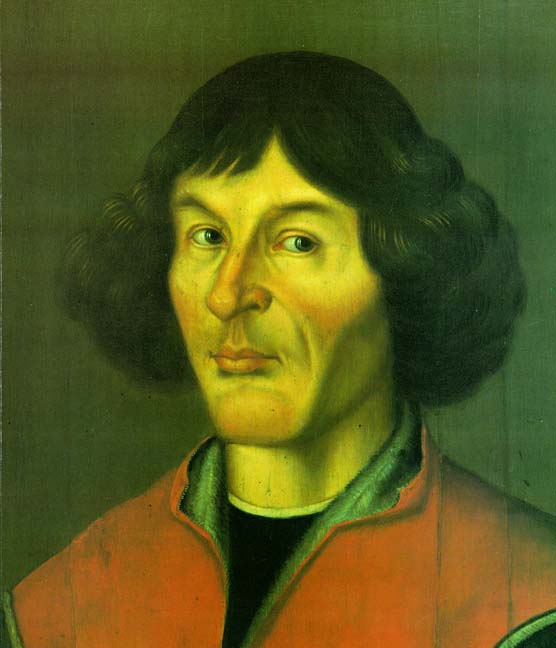
Nicolaus Copernicus was born in Toruń on 19 February 1473 at 4:48 a.m. He was the son of the wealthy merchant Nicolaus Copernicus the Elder and Barbara née Watzenrode. The date of his birth was preserved in a printed horoscope prepared around 1541. Most probably, this information was supplied by the scholar himself, since in fifteenth-century Toruń no parish registers or official birth records were yet kept. The future astronomer was baptised in the parish church of Saints John the Baptist and John the Evangelist, using the bronze baptismal font preserved there.
Father
The astronomer’s father, Nicolaus Copernicus the Elder, was probably born around 1425. He is believed to have been the son of Andrzej, a merchant from Nysa, and Barbara. This is suggested by the fact that as early as 1448 he was already conducting independent commercial activity. He dealt primarily in the copper trade. In the same year, acting as a Kraków merchant, he delivered 38 hundredweights of this raw material to Gdańsk, which was recorded in the local bench court books.
The copper trade was a traditional specialisation of the Copernicus family. The family name probably derives from the Latin word for copper, cuprum. In modern Polish it could be interpreted as an equivalent of the word “miedziownik”, meaning a person engaged in the extraction or processing of this metal. Although the surname undoubtedly had Slavic roots, it is difficult to determine unambiguously the linguistic preferences of the astronomer’s father. He operated on the Polish–Silesian borderland, where commercial activity required fluency in both Polish and German. It may therefore be assumed that he knew both languages to a similar degree. In his native Nysa, his relatives were referred to, in accordance with chancery practice, as Koppersmeds, whereas outside that town the surname Kopernik was consistently used.
The significant position of Nicolaus Copernicus the Elder in the merchant community indicates the great trust placed in him by his trading partners from Kraków. In August 1454, he was entrusted with mediation in settlements conducted with Gdańsk and Toruń. He then received from the authorities of Gdańsk 350 Hungarian florins, constituting part of the repayment of a total debt of 1,000 florins owed to the Kraków merchants Jan Sweidniczer, Bartłomiej Graudentz and Stanisław Gorteler. He then travelled to Toruń to collect a further sum of 1,000 Hungarian florins.
In the Toruń tax register of 1455, a person described as Coppernick was recorded as living in the house at 4 Szewska Street. The entry did not include a first name, but scholars associate it with the father of the future astronomer. Three years later, in 1458, Nicolaus Copernicus already appeared as a citizen of Toruń. In Kraków, he then acted as an intermediary in the transfer by the merchant Jan Wierzynek of 50 grzywnas due to the children of Piotr Bemen, a townsman of Gdańsk.
Mother
Most probably also in 1458, Nicolaus Copernicus married Barbara Watzenrode. At the time of the wedding the bride was about eighteen years old, while her future husband was probably about thirty-three. As part of her dowry, Barbara received from her father a tenement house located on St Anne’s Street, corresponding to today’s address at 15 Kopernika Street. This property had been taken over by Łukasz Watzenrode the Elder in 1459 from his nephew Szymon Falbrecht for debts.
It cannot be ruled out that this marriage was influenced by the proximity of the houses belonging to Nicolaus Copernicus’s future father-in-law, Łukasz Watzenrode, who lived at 10 Żeglarska Street, and his protector Jerzy Sweidniczer, who lived at number 8 on the same street, in the building now known as the Dąmbski Palace.
The Watzenrode family had been connected with Toruń for much longer than the Copernicus family. Its roots reached back to the Rhineland-Palatinate, probably to the Eifel Mountains area. In the thirteenth century, members of the family probably moved to one of the Westphalian towns, perhaps Soest or Dortmund. A large part of the patriciate of medieval Toruń originated precisely from these centres. The mass migration of Westphalian inhabitants to the lower Vistula took place at the end of the thirteenth and in the first half of the fourteenth century.
The earliest source references to the Watzenrode family in Toruń date from 1369. Entries in the oldest bench court book of the Old Town indicate that three brothers lived there at that time: Friedrich, Albrecht and Johann. Their strong links with the local patriciate and their ownership of numerous properties suggest that their father had arrived in Toruń earlier and had succeeded in achieving a significant social position.
Albrecht I Watzenrode is regarded as the progenitor of all later Toruń representatives of the family. He married the daughter of the councillor Łukasz Russ, whose name is not known from the sources. The marriage produced five sons: Friedrich II, Albrecht II, Cezary, Tileman and Łukasz, as well as three daughters. Two of them became the wives of Jan Warschaw and Jakub Falbrecht, while the third, Barbara, married Gerhard Friese, who served as a town councillor in the years 1419–1435. Albrecht owned half of a tenement house situated at 36 Old Town Market Square, where he also lived.
The youngest of his sons was Łukasz Watzenrode. He was probably born around 1395, shortly before his father’s death. He was first recorded in the sources together with his brothers in 1427, which may suggest that he had previously stayed outside Toruń. Between 1434 and 1439 he married Katarzyna, the daughter of the councillor Jan Rusop and the widow of Henryk Peckaw, who had served as an Old Town bench judge in the years 1426–1434.
Łukasz Watzenrode’s public career developed gradually. In 1432 he became a bench judge of the Old Town, and seven years later he assumed the office of senior bench judge, which he held until his death in 1462. He left three children: Krystyna, later wife of Tileman von Allen, a long-serving councillor and mayor of Toruń; Barbara, who became the wife of Nicolaus Copernicus the Elder; and Łukasz II Watzenrode, the future Bishop of Warmia.
Family
Nicolaus Copernicus the Elder continued the traditional directions of his family’s commercial activity. Initially he achieved considerable economic success, reaching a position that even enabled him to grant loans to other merchants. His high social status and extensive family contacts contributed to his election as a bench judge of the Old Town court during the kiery held on 22 February 1465. He held this office continuously until his death.
In the final years of his life, however, his financial situation deteriorated considerably. In 1480 he sold the tenement house on St Anne’s Street, corresponding to today’s address at 15 Kopernika Street, to the furrier described in the sources as “Polish” Grzegorz. Shortly before his death, he was still seeking repayment of a debt of 190 grzywnas from Nicolaus Haneman. These circumstances indicate that the family did not possess wealth sufficient to secure an especially favourable material future for the youngest son. In 1483 Nicolaus Copernicus the Elder died, leaving his ten-year-old son fatherless.
The marriage of Nicolaus Copernicus the Elder and Barbara Watzenrode produced four children. The eldest, Barbara, became abbess of the Benedictine convent in Chełmno. Katarzyna married Bartłomiej Gertner, a newcomer from Kraków. The third child was Nicolaus Copernicus (1473–1543), the future astronomer and Warmian canon. The youngest, Andrzej, also became a Warmian canon.
After their father’s death, the life prospects of the siblings depended above all on the support of the wider family, especially their uncle Łukasz Watzenrode, their mother’s brother. Thanks to his education, ambition and political ability, he advanced rapidly within church structures, attaining one of the highest dignities in Warmia. In the realities of the late Middle Ages, family ties played an important social role, and supporting relatives in obtaining offices and incomes was a common practice, regarded not so much as an abuse as an expression of an influential patron’s responsibility for the fate of those closest to him.
The city
Toruń, where Nicolaus Copernicus was born, had already passed the period of its greatest economic and political prosperity. Its former splendour was recalled by monumental churches, imposing merchant houses and the town hall dominating the market square with its high tower, from which there was a view over the whole city and its surroundings. Although the enormous revenues once derived from long-distance trade in copper, wax, hides and timber belonged to the past, Toruń continued to make efforts to maintain its economic position and the broad range of privileges granted both by the Teutonic Order and by King Casimir IV Jagiellon.
Of particular importance was the staple right covering all goods transported from Polish lands to Gdańsk. Under this privilege, merchants were obliged to offer the goods they carried for sale in Toruń at prices lower than those prevailing in the port of Gdańsk. This arrangement brought considerable economic benefits to the townspeople of Toruń, but at the same time caused dissatisfaction among Polish and Silesian merchants, who tried to bypass the city in order to avoid unfavourable commercial intermediation.
The municipal authorities took measures to counteract such practices. Armed detachments from Toruń controlled the routes leading to Gdańsk through the Tuchola Forests and confiscated goods transported in breach of the regulations in force. An important advocate of the city’s interests remained the Bishop of Warmia, Łukasz Watzenrode, who until his death sought at the royal court to maintain Toruń’s trading privileges. After his departure, however, there was no influential defender of these rights. As a result, the interests of Gdańsk merchants and the nobility gained the upper hand, and Toruń’s staple right was finally abolished in 1537.
As compensation, the city retained a monopoly on the trade in salt and salt-preserved products imported by sea through Gdańsk and then directed to Polish lands and Silesia.
Family home
The most important place connecting Nicolaus Copernicus with his native Toruń was the tenement house located on the Market Square under number 36. It is assumed that the Copernicus family moved there around 1468. Earlier, in 1459, the astronomer’s grandfather Łukasz I Watzenrode had taken over, for debts, from his nephew Szymon Falbrecht a house on St Anne’s Street, corresponding to today’s address at 15 Kopernika Street. He then transferred this property to his daughter Barbara and her husband Nicolaus Copernicus the Elder. The sources confirm that the family lived there as early as July 1462. The tenement house, as mentioned above, was sold in 1480 to “Polish” Grzegorz, who had probably been renting it from around 1468.
The decisive moment was the purchase by the astronomer’s father of half of the house on the Market Square on 8 July 1468. The property was bought from the Gdańsk merchant Jakub Michaelis. It was one of the most representative tenement houses in Toruń, located on the main frontage of the Market Square, through which an important trade route linking southern and northern Europe ran. The building was distinguished by a façade decorated with glazed bricks, and for this reason was known as the “Glazed House” (Glasenhaus).
One half of this tenement house had been in the possession of the Watzenrode family since the end of the fourteenth century. The lack of source information concerning its fate after the death of Cezary Watzenrode around 1424 allows one to assume that the property did not leave the family’s hands. The other part of the building passed between 1449 and 1455 into the ownership of Hans Weldiger. He in turn sold it in 1463 to Jakub Michaelis, from whom Nicolaus Copernicus the Elder bought it five years later for the sum of 100 grzywnas. Shortly after this transaction the family probably moved to the new residence.
After the death of the astronomer’s father, the tenement house fell to his daughter Krystyna and her husband Bartłomiej Gertner. Gertner’s financial problems, however, led to the loss of the property. Eventually the entire property passed into the hands of Barbara Copernicus, the astronomer’s sister and abbess of the Benedictine convent in Chełmno. In 1521 she sold the house to the physician Hieronim Wildenberg for 600 grzywnas. In this way the house on the Market Square definitively ceased to belong to the Copernicus family.
School
Like most boys from burgher families, Nicolaus Copernicus began his education around the age of seven, probably in 1480, while his father was still alive. After the death of Nicolaus Copernicus the Elder and Barbara Watzenrode’s probable departure for Chełmno, care of the children was taken over by Tylman von Allen, an influential relative of the family, who served as mayor of Toruń and actively participated in the city’s political life.
The school attended by the young Copernicus was located at the corner of Ciasna and Szkolna Streets, in the place corresponding to today’s addresses at 11 Łazienna Street and 1–3 Św. Jana Street. This institution provided two levels of education. The first comprised elementary instruction, during which pupils acquired the ability to read and write in the official language of the city, that is German, and learned the basics of arithmetic, singing and Latin. This programme usually lasted three years.
At the same time a higher level of teaching functioned, known as the Latin school. It covered the programme of the trivium and lasted about five years. The most important subjects were Latin, logic and singing, and the whole educational process was divided into three classes. Initially parish schools prepared mainly candidates for the clergy, but from the mid-fourteenth century the number of pupils increased steadily. The development of trade and crafts in towns meant that reading, writing and accounting skills became necessary for increasingly broad social groups.
It is estimated that in the fifteenth century about 80% of men living in Toruń possessed basic reading and writing skills. This indicates a relatively high level of educational dissemination. During Copernicus’s schooling, between 300 and 400 boys may have attended the school.
There are indications suggesting that the future astronomer encountered astronomical literature already at an early stage of his education. The library of the St John’s school contained the book collection of Konrad Gesellen, one of the best-educated rectors of the institution. Gesellen was closely connected with the Watzenrode family: he was a friend of the astronomer’s grandfather Łukasz Watzenrode the Elder, a teacher of the future Bishop Łukasz Watzenrode and the confessor of Katarzyna, Nicolaus’s grandmother. In 1464 he lived in a room at the rear of the tenement house at 10 Żeglarska Street, which belonged to Copernicus’s grandmother.
The question of Copernicus’s further education after completing the parish school is still discussed in historiography. Hypotheses assuming that he studied at cathedral schools in Włocławek or Gniezno have been rejected. Chełmno remains the most probable place where he continued his education.
In 1473 the Brethren of the Common Life, who had arrived from Zwolle in the territory of today’s Netherlands, began their educational activity there. It is assumed that around 1488 Nicolaus Copernicus may have begun his studies in this renowned institution. Its high standing is demonstrated by the fact that in 1489 the municipal council of Chełmno extended the brethren’s existing privileges for a further thirty years. The school attracted pupils not only from Prussia, but also from distant regions of the Netherlands.
It is also highly probable that Nicolaus Copernicus studied exclusively in Toruń. There was a custom there whereby particularly able pupils in the higher classes served as assistant teachers for younger colleagues. The turmoil connected with his uncle Łukasz Watzenrode’s assumption of the Warmian bishopric in 1489 against the king’s will did not allow the nephew of the ruler’s enemy to depart for studies in Kraków.
In 1491 the bishop decided that the political situation now allowed Nicolaus and his younger brother Andrzej to begin university studies. They both went to Kraków, where they began their education at the Kraków Academy, one of the most important universities in Central Europe. Probably at the same time their sister Katarzyna married another newcomer from Kraków, Bartłomiej Gertner, which relieved the two young men of concern for the maintenance of the family.
Kraków
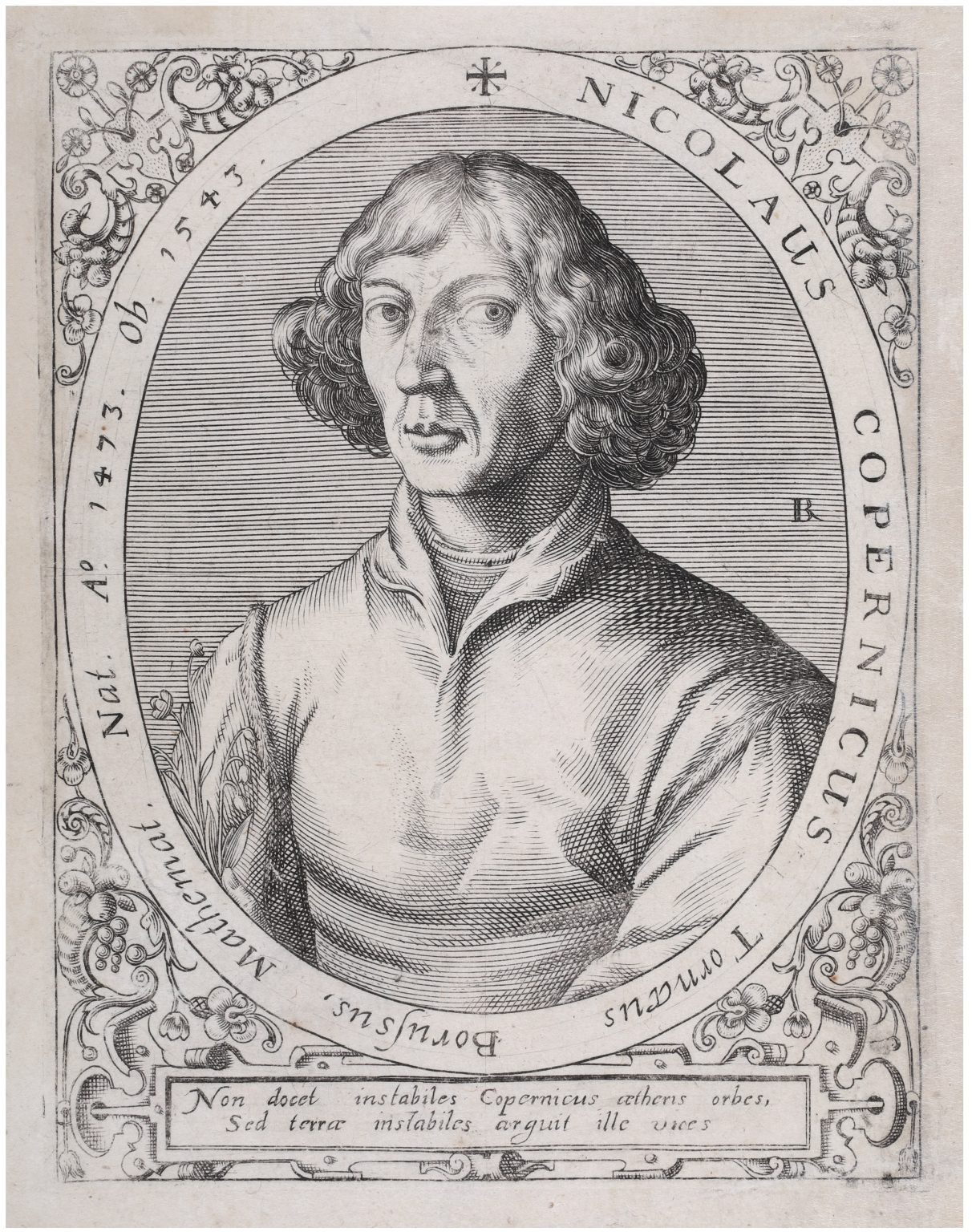
At the end of the fifteenth century Kraków and the Kraków Academy operating there were experiencing a period of particular flourishing. The power of the Jagiellonian dynasty had then reached significant proportions, symbolised by the crowns of Poland, Lithuania, Bohemia and Hungary remaining in the hands of members of the dynasty. The kingdoms of Bohemia and Hungary were ruled by the eldest son of Casimir IV Jagiellon, Władysław. Although the final years of Casimir’s reign were connected with different plans for the division of the dynastic inheritance, and the Hungarian kingdom was to fall to John Albert, the success of Jagiellonian dynastic policy remained beyond dispute.
Among the 69 students entered in the register of the Kraków Academy in 1491 were two men from Toruń: “Nicolaus Nicolai de Thuronia” and, several entries further on, “Andreas Nicolai de Thorun”. It may be assumed that each of them paid an entry fee of four grosze.
The structure of the university comprised four faculties. The highest position was held by the theological faculty, alongside which there were faculties of canon law and medicine. The condition for undertaking studies at any of them was the earlier completion of the faculty of liberal arts, also known as the arts faculty, and obtaining a master’s degree. The programme of this faculty was based on the classical division into the trivium and quadrivium, encompassing the seven liberal arts. The trivium comprised grammar, rhetoric and dialectic, while the quadrivium comprised arithmetic, geometry, music and astronomy.
The course of study lasted on average five years. After two years of study a student obtained the bachelor’s degree, while completion of the full course made it possible to obtain the title of master of liberal arts. It should be emphasised, however, that obtaining an academic degree was not the aim of all students. In Copernicus’s time only about one quarter of students completed their education with the formal acquisition of an academic title.
The considerable renown of the Kraków faculty of liberal arts attracted numerous foreign students. It is estimated that in the years 1480–1510 more than 55% of students came from outside the borders of the Kingdom of Poland, mainly from the territory of the German Reich and the Kingdom of Hungary.
Among the sciences included in the quadrivium, astronomy enjoyed particular renown. Marcin Król of Żurawica is regarded as the first outstanding representative of this discipline in Kraków. His pupils included Marcin Bylica of Olkusz, later also known to Copernicus. Bylica, who had earlier lectured in Bologna and served as court astrologer to the Hungarian kings, focused mainly on astrology. Strictly astronomical problems, however, were developed by Jan Schelling of Głogów and Wojciech of Brudzewo. The scholarly activity of the latter in particular may have exerted a significant influence on the young Copernicus, prompting him to take a critical view of the prevailing models of the structure of the universe.
The stay of the Copernicus brothers in Kraków also coincided with a period of intense development of humanism. Filip Kallimach and Conrad Celtis played an important role in it. The latter established the Vistulan Literary Society, which brought together talented students of the Kraków Academy. Its members included Wawrzyniec Korwin, later secretary of the Toruń town council and a long-standing correspondent of Copernicus. Through these contacts the future astronomer encountered the literary milieu of Kraków.
During his studies Nicolaus also became acquainted with Bernard Wapowski, who exerted an important influence on the development of his cartographic interests. At the same time Henryk Snellenberg, later a Warmian canon, also studied at the university. Despite their long acquaintance, relations between him and Copernicus were probably not particularly close, as later expressed in a legal dispute. Among the students were also Jan and Jerzy Konopacki, but there are no sources confirming closer contacts between them and Copernicus.
Seven bursae founded by private benefactors functioned for the needs of students. Everything indicates, however, that the Copernicus brothers did not make use of this type of accommodation. Thanks to the financial support and political influence of their uncle, they could live in private lodgings. It cannot be ruled out that they rented a room on Kanonicza Street from Canon Piotr Wapowski, where Nicolaus may have met Bernard Wapowski.
In the initial period of his studies Copernicus dealt mainly with Latin grammar, poetics and rhetoric, and with the study of selected works of Aristotle. Relatively early, however, he began attending lectures on mathematics, Euclidean geometry and astronomy. In the summer semester of 1493 he listened to lectures on Georg Peurbach’s theory of the planets, enriched with commentaries by Wojciech of Brudzewo and presented by Master Szymon of Sierpc. Of particular importance to him may have been the Kraków scholar’s remarks pointing to inconsistencies and errors in the astronomical system under discussion.
He was also greatly impressed by Wojciech of Brudzewo’s lectures devoted to Aristotle’s treatise On the Heavens and the World. It was these lectures that may have contributed to the formation of his later critical attitude toward traditional cosmological ideas.
It is not known exactly when the Copernicus brothers ended their studies in Kraków. It is certain only that they did not obtain the degree of master of liberal arts. The reason for leaving the university may have been family circumstances, perhaps connected with the death of their mother around 1495. It is known that in that year Copernicus’s aunt Katarzyna Peckaw, abbess of the Benedictine convent in Chełmno, died. If Copernicus’s mother was then staying with her sister, it is highly probable that she met the same fate. It is known, however, that in the autumn of that same year Nicolaus was already staying at the bishop’s castle in Lidzbark Warmiński.
Member of the Warmian chapter
After his return from Kraków, Nicolaus was placed under the special care of his uncle, the Bishop of Warmia Łukasz Watzenrode. An opportunity soon arose to begin his ecclesiastical career.
On 26 August 1495 the Warmian canon Jan Zanau died, leaving a vacant place in the sixteen-member cathedral chapter in Frombork. Membership in this body ensured high social status and significant income. The chapter owned about one third of the territory of Warmia, deriving income from rents paid by the nobility, townspeople and peasants, as well as from its own farms.
The canons participated in the governance of the diocese together with the bishop and had the right to elect his successor. The leadership of the chapter consisted of four prelates: provost, dean, custodian and cantor. According to the regulations in force, vacancies arising in even-numbered months were filled by the chapter, while in odd-numbered months the right of nomination belonged to the pope.
Because Jan Zanau died in August, the decision belonged to the chapter. Everything indicates that, under the strong influence of Bishop Watzenrode, its members elected Nicolaus Copernicus to the vacant place. The election itself, however, did not automatically mean taking possession of the prebend or the right to draw the income connected with it. The installation of the new canon was postponed for nearly two years.
Only in August 1497, while already in Italy, did Copernicus authorise Krzysztof Tapiau and Andrzej Cletz to take possession of the canonry on his behalf. The delays probably resulted from the lack of full priestly ordination and unfinished studies. Scholars still do not agree whether Copernicus received priestly ordination or possessed only minor orders, which is the more certain view, sufficient to hold a canonry.
In February 1496 he appeared in a document issued by his uncle as a “Chełmno cleric”. Soon afterwards he went for further studies to Italy, where his brother Andrzej joined him in 1498. Their main destination was Bologna, where they were to obtain legal education preparing them for high ecclesiastical offices.
Bologna, Rome, Padua and Ferrara
The University of Bologna was one of the oldest and most prestigious universities in Europe. It was characterised by a relatively democratic system of organisation, in which students played a significant role in managing the academic community. Nicolaus Copernicus was entered into the so-called German nation, as his uncle Łukasz Watzenrode had been before him.
Although the main purpose of his stay was legal studies, it was in Bologna that a breakthrough occurred in the development of his astronomical interests. Copernicus established cooperation with the professor of astronomy Domenico Maria Novara, who became his teacher and close collaborator. Participation in the astronomical observations conducted by Novara enabled the young scholar to become familiar with practical methods of studying the sky.
Of particular importance was their joint observation of a total lunar eclipse on 9 March 1497. The results of the analyses carried out may have contributed to undermining Copernicus’s confidence in the geocentric system of Ptolemy. In the Bologna milieu he also encountered discussions concerning the motions of celestial bodies, which gradually led him toward his own reflections on the structure of the universe.
At the same time he studied grammar, rhetoric, poetics and Greek under Antonio Urceo. Knowledge of Greek later enabled him to use the works of ancient authors independently and to translate Greek texts into Latin.
In the following years Copernicus’s stay also included Rome, Padua and Ferrara. In Rome he conducted further astronomical observations and delivered public lectures. In Padua he studied medicine, while in Ferrara on 31 May 1503 he obtained the degree of Doctor of Canon Law. Although he did not formally complete medical studies, the knowledge he acquired later allowed him to practise successfully as a physician.
It was during his stay in Italy that the basic assumptions of the heliocentric theory matured. When he returned to Warmia in 1503, Copernicus already possessed the foundations of a concept that in the future was to lead to one of the greatest scientific revolutions in the history of Europe.
In the service of his uncle
After Nicolaus Copernicus returned from Italy, Bishop Łukasz Watzenrode decided to involve his nephew more fully in public and ecclesiastical activity. Even before his arrival in Warmia, he ensured additional sources of income for him, obtaining for him the scholasteria at the Church of the Holy Cross in Wrocław and papal permission to hold further ecclesiastical benefices.
Already at the beginning of 1504 Copernicus took part alongside his uncle in the assemblies of the estates of Royal Prussia held in Malbork and Elbląg. It cannot be ruled out that they then both went to Gdańsk, where on 21 January they participated in the wedding ceremony of Kordula von Allen, the astronomer’s cousin, to the Gdańsk patrician Reinhold Feldstedt. In the following months Nicolaus accompanied the bishop on numerous political and diplomatic journeys. In April he stayed with him in Toruń during the deliberations of the Prussian council with the participation of King Alexander Jagiellon, and then took part in the journey of the royal entourage to Gdańsk through Malbork and Elbląg. In summer and autumn he was also present at subsequent assemblies of the estates of Royal Prussia.
By the end of 1504 he was already in Frombork together with his brother Andrzej, where both settled the financial obligations required by the chapter. Everything indicates that in the following years Copernicus also regularly participated in his protector’s travels, both to assemblies of the estates and on diplomatic missions conducted with the Polish king and the grand master of the Teutonic Order.
In the same period he completed the Commentariolus on the hypotheses of celestial motions, which was the first outline of his heliocentric theory. In January 1507 the chapter officially delegated him to serve the bishop in Lidzbark Warmiński. This decision probably only formalised an already existing state of affairs. In return for additional remuneration, Copernicus was to act as his uncle’s physician and medical attendant.
In the Lidzbark castle he occupied a chamber located near the bishop’s apartments. He also accompanied Łukasz Watzenrode on numerous journeys to Kraków, Grudziądz, Elbląg and Piotrków. During these trips he disseminated his astronomical views beyond the borders of Warmia.
His literary activity also developed in this period. A friend from his Kraków studies, Wawrzyniec Korwin, prepared an introduction for him to the letters of Theophylact Simocatta translated from Greek. The work was printed in 1509 and dedicated to Bishop Łukasz Watzenrode.
Copernicus did not neglect astronomical observations either. On 2 June 1509 he observed a lunar eclipse, which enabled him to determine more accurately the mean motion of this celestial body. At the same time he was also involved in cartography. Before 1510 he prepared a map of Warmia and the western borders of Royal Prussia. Although this work has not survived to our times, the sources indicate that it aroused considerable interest among contemporaries.
Despite suppositions appearing in historiography that Copernicus left Lidzbark earlier, it should be assumed that he remained with his uncle until the latter’s death, which occurred on 29 March 1512 in Toruń. In the final years of the bishop’s life, he also participated in the administrative work of the chapter, serving, among other things, as its chancellor. At the same time he continued systematic astronomical observations, including a total lunar eclipse in October 1511 and the planet Mars at the beginning of 1512.
In the service of the chapter
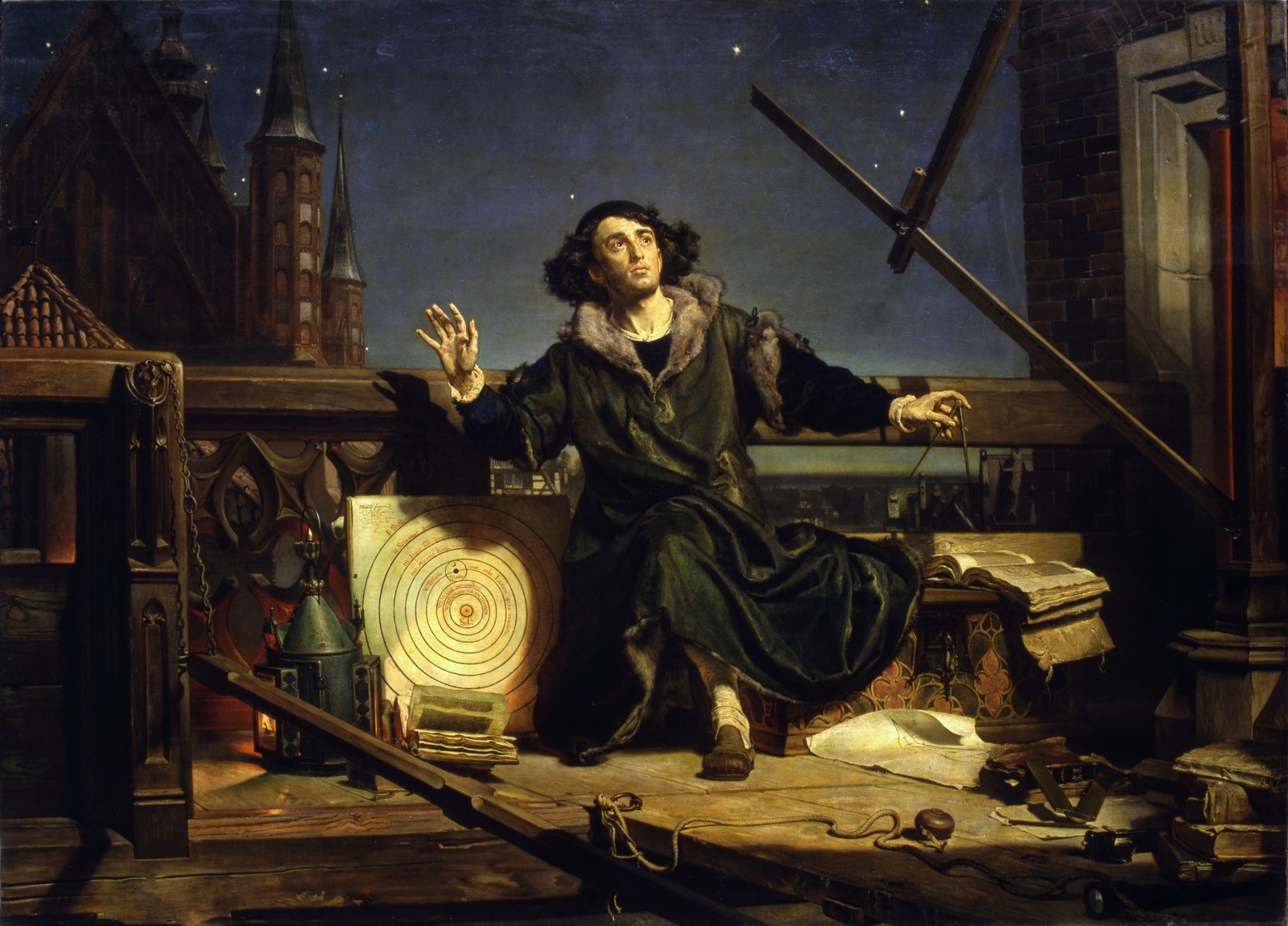
Bad money drives out good money.Copernicus–Gresham law
After the death of Łukasz Watzenrode, Copernicus settled permanently in Frombork. From then on he actively participated in the activities of the Warmian chapter, performing numerous administrative duties. Already in 1512 he took part in the election of a new Bishop of Warmia, Fabian Luzjański. In the same period his financial situation improved thanks to the acquisition of the estate of Baltazar Stockfisch. At the same time he witnessed difficult events connected with the fate of his brother Andrzej, whom the chapter, because of advanced illness, deprived of the right to participate in its deliberations.
In the following years Copernicus served as chancellor of the chapter and became involved in organisational matters of the diocese. At the same time he devoted increasing attention to scholarly activity. In 1513 he was invited to participate in work on the reform of the calendar. Although his proposals were not ultimately accepted, this event testified to the scholar’s growing authority.
The years 1512–1516 constituted one of the most intensive periods of his research work. At that time he conducted numerous observations of the motions of the planets, which formed the basis for the preparation of De revolutionibus orbium coelestium. It is assumed that it was precisely around 1514–1515 that he began the systematic writing of his most important astronomical treatise.
In November 1516 he was entrusted with the office of administrator of the estates of the Warmian chapter. This duty required him to move to Olsztyn, the administrative centre of the largest district belonging to the chapter. In his new role he dealt with settling colonists on abandoned lands, managing landed property and resolving economic matters.
At this time relations between Poland and the Teutonic Order were becoming increasingly tense. Copernicus undertook actions aimed at protecting the chapter’s interests, including against fishermen from the Order’s territories who were conducting illegal fishing on the Pasłęka River. At the same time he developed his economic interests. At the request of Bishop Fabian Luzjański he prepared the first dissertations devoted to monetary reform. The Meditationes produced then, together with later treatises, marked the beginning of his studies of the circulation of money and the functioning of the economy.
In Olsztyn too he did not abandon astronomical research. He observed Mars and prepared astronomical tables. It was probably there that he completed the first book of De revolutionibus. In 1519 he also prepared another map, showing the western part of the Vistula Lagoon.
In January 1520, during the Polish–Teutonic War, he took part in an unsuccessful diplomatic mission to Grand Master Albert Hohenzollern. Soon afterwards the Teutonic Knights burned Frombork, destroying among other things the external curia belonging to Copernicus. Forced to remain in Olsztyn, he organised the town’s defensive preparations, sought supplies of arms and directed administrative activities during the wartime threat.
In November 1520 he was again entrusted with the administration of the chapter estates. Faced with the threat of a siege of Olsztyn, he conducted intensive correspondence with the royal authorities, requesting military support. Thanks to the measures undertaken, the town was properly prepared for defence, although in the end the Teutonic troops did not launch an assault.
The Frombork retreat
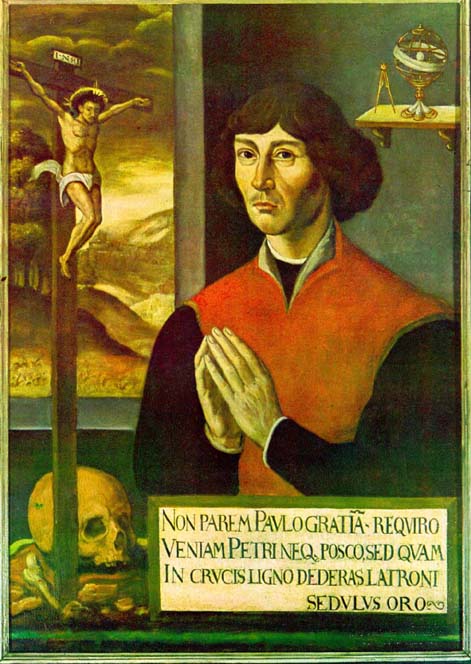
After the period of intensive administrative and political activity ended, Nicolaus Copernicus settled permanently in Frombork before August 1521. This town remained his place of residence until his death. This did not mean, however, that he withdrew from public life. Already in 1522 he again became involved in the work of the estates of Royal Prussia on the reform of the monetary system. During the assembly in Grudziądz he presented a treatise devoted to monetary issues, prepared several years earlier. A considerable part of the proposals it contained was subsequently taken into account in the resolutions adopted by the Prussian estates. The following year the principle of equalising Prussian and Polish coinage according to the conversion rate proposed by Copernicus was also adopted.
After the death of Bishop Fabian Luzjański at the beginning of 1523, the chapter entrusted Copernicus with the office of general administrator of Warmia. He held it until the diocese was taken over by the new bishop. In this capacity he represented the chapter before royal envoys and participated in the procedure for electing Maurycy Ferber as Bishop of Warmia. After the end of the period of administration, he again served as chancellor of the chapter in the years 1523–1525.
During this time his scholarly activity did not cease. In 1524 he prepared the manuscript of the third chapter of the first book of De revolutionibus, while continuing work on earlier parts of the work. His astronomical views gradually began to gain renown beyond the borders of Warmia. This is shown, among other things, by his correspondence with Bernard Wapowski, in which Copernicus polemicised with Jan Werner’s theses concerning the motion of the eighth celestial sphere. These contacts included not only astronomical questions but also cartographic ones, for Wapowski used the astronomer’s knowledge when preparing maps of Polish and Lithuanian lands.
From March to September 1526 Copernicus stayed in Gdańsk, where he treated one of his relatives. This stay strengthened his ties with the family living in the city on the Motława. He maintained particularly close relations with the Feldstedt and Schilling families. After the death of Reinhold Feldstedt, he became one of the guardians of his widow and children, and he continued to perform these duties many years later. At the same time he also participated in debates on monetary reform, preparing opinions and positions on monetary policy for the municipal authorities of Gdańsk.
After the relatively calm year 1525, he again became involved in monetary matters. At the request of Bishop Maurycy Ferber, in 1526 he prepared the final version of the treatise De monetae cudendae ratio. In this work he formulated the economic principle that money of poorer quality drives money of better quality out of circulation. Although later monetary reforms were not based directly on his proposals, Copernicus’s views played an important role in the economic discussions of the period.
At the same time he remained a respected physician. He cared, among others, for Bishop Maurycy Ferber, whose long illness lasted until the hierarch’s death in 1537. He also treated other people connected with the chapter and the elites of Royal Prussia.
After completing the essential part of De revolutionibus, which probably took place around 1530, Copernicus continued to participate actively in the life of the Warmian chapter. He performed envoy, visitation and administrative functions. At the same time his heliocentric theory became increasingly known in the scholarly circles of Europe. In 1533 the astronomer’s views were presented to Pope Clement VII by the papal secretary Johann Albrecht Widmanstadt. Two years later Bernard Wapowski became acquainted with Copernicus’s work, and in 1536 Tiedemann Giese defended his theory against growing criticism. In 1537 Cardinal Nicolaus Schönberg sent a letter to Frombork encouraging the scholar to publish his discoveries. It was probably under his influence that Copernicus prepared a preface addressed to Pope Paul III and made efforts to send the work to Rome. Unfortunately, this attempt to publish De revolutionibus was thwarted by the sudden death of Cardinal Schönberg in that same year.
An important event was the death of Bishop Maurycy Ferber in 1537. Copernicus was one of the hierarch’s closest collaborators, and therefore the loss of this protector was of great significance to him. As a sign of recognition he was named in the bishop’s will as one of the beneficiaries of monetary bequests. He also took part in preparing an inventory of the deceased’s estate. The chapter placed his name on the list of candidates for the office of Bishop of Warmia, although Ferber’s actual successor was to be Johannes Dantiscus. At the same time Copernicus continued intensive astronomical observations, including those of Venus, Mars, Saturn, Jupiter and the Moon.
Anna Schilling and Rheticus
One of the most enigmatic episodes in Copernicus’s private life remains the presence of Anna Schilling in his surroundings. This woman appeared in Frombork before 1538 and became the object of interest of Bishop Johannes Dantiscus, who repeatedly demanded that she be removed from the astronomer’s curia. Perhaps the reason for Anna’s arrival at her cousin’s house was his nervous breakdown, connected with the death of Cardinal Schönberg and the failure of efforts to publish De revolutionibus in Rome.
It was formerly believed that Anna was the daughter of the well-known mint master Maciej Schilling, but the sources do not confirm such kinship. It seems more probable that she was connected with the Schilling family related to Copernicus through the von Allen and Krüger lines. Anna was the daughter of his maternal cousin. The astronomer maintained close contacts with the Gdańsk branch of his family, which may explain Anna’s presence in his household.
In correspondence with Dantiscus, Copernicus emphasised that it was difficult for him to find a suitable, honest and related housekeeper. After leaving his house in 1539, Anna remained in Frombork for some time and then returned to Gdańsk. She came back there again after the astronomer’s death in order to sell the property she owned. The character of their relationship remains a matter of historical speculation. There is, however, no evidence allowing one to define unambiguously the nature of the bond between them.
It cannot be excluded that the affair of Anna Schilling was indirectly connected with Bishop Dantiscus’s conflict with Aleksander Sculteti, a canon who maintained an open relationship with a woman and sympathised with the Reformation. In this view Copernicus may have become a victim of wider political and religious tensions present in the Warmian chapter.
Of far greater significance for the history of science was the arrival in Frombork of Georg Joachim Rheticus. The young professor of the University of Wittenberg came there in May 1539 to meet the author of the heliocentric theory and persuade him to publish the results of his research. Although he came from a Protestant milieu, his interest in Copernicus’s work did not arise from Reformation inspirations. On the contrary, both Martin Luther and Philip Melanchthon treated the theory of the Earth’s motion with clear reluctance.
Rheticus quickly became the most important promoter of Copernicus’s views. In September 1539 he completed the Narratio Prima (First Account), the first printed presentation of the basic assumptions of the heliocentric theory. The work appeared in print in Gdańsk in 1540 and contributed significantly to the dissemination of the new astronomical ideas.
In the following years Rheticus undertook intensive efforts to publish De revolutionibus. He established contacts with the printer Johannes Petreius and the theologian Andreas Osiander in Nuremberg. Thanks to his efforts, the process of preparing the work for print began. In 1541 he again visited Frombork, taking with him some of Copernicus’s materials, including manuscripts concerning trigonometry.
Final years and death
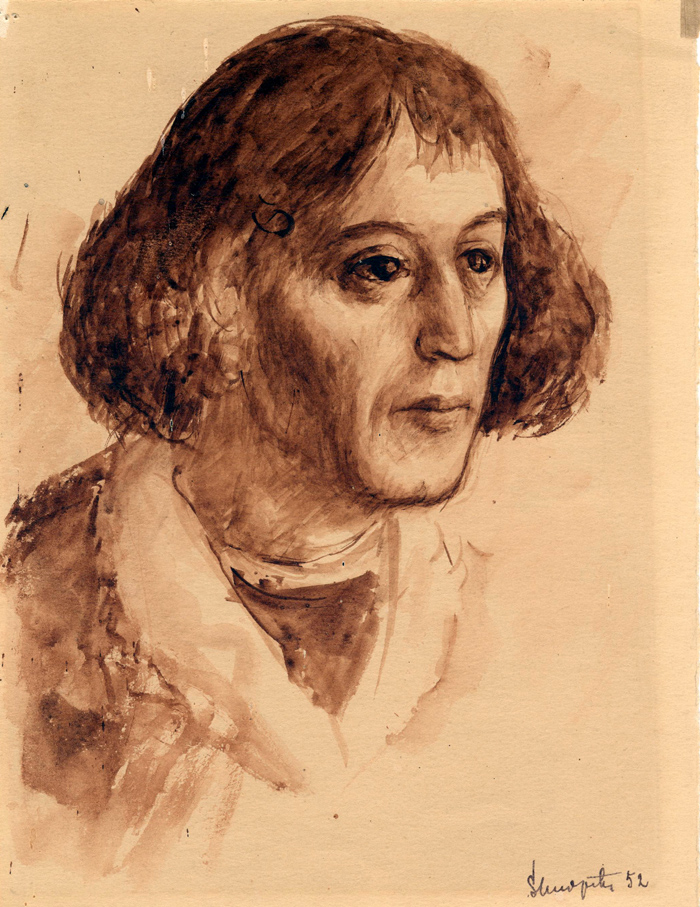
At the beginning of the 1540s Copernicus’s health began to deteriorate noticeably. Nevertheless he continued his scholarly activity, maintained correspondence with learned men and participated in the life of the chapter. In 1541 he also visited Königsberg, where he gave medical advice to Duke Albert Hohenzollern and his collaborators.
At the same time preparations for the publication of De revolutionibus were under way. In May 1542 the first sheets of the work were printed in Nuremberg, and shortly afterwards Copernicus’s treatise on trigonometry also appeared.
At the beginning of December 1542 the scholar suffered a cerebral haemorrhage, which caused partial paralysis of the right side of his body. He spent the last months of his life in a grave state of health. According to Tiedemann Giese’s account, for much of this period he lacked full consciousness.
Around 21 March 1543 the printing of De revolutionibus orbium coelestium was completed in Nuremberg. Everything indicates that Copernicus was no longer able to acquaint himself with the finished copy of his work. He died before 21 May 1543, since on that day his successor, Jan Loitz, also a relative of Copernicus and the son of another of his Gdańsk cousins, was installed in his canonry. The cause of death was most probably the consequences of atherosclerotic changes and the stroke he had suffered.
In accordance with chapter tradition, he was buried beneath one of the altars of the Frombork cathedral. Over time, the exact location of his burial place was forgotten. Only modern archaeological research led to the discovery of remains considered to belong to the astronomer. After analyses had been carried out, they were reburied with ceremonial solemnity in the Frombork cathedral on 22 May 2010. Despite this, some scholars still raise doubts concerning the identification of the discovered remains. This question remains one of the last unresolved mysteries connected with the life and death of the creator of the heliocentric theory.