Eighteen historical images of Nicolaus Copernicus — from Matejko’s painting to nineteenth-century engravings — paired with 3D models generated from the source portraits. Rotate the models, enlarge the images and use AR on a phone to place Copernicus in your surroundings.
Portrait
3D model · AR
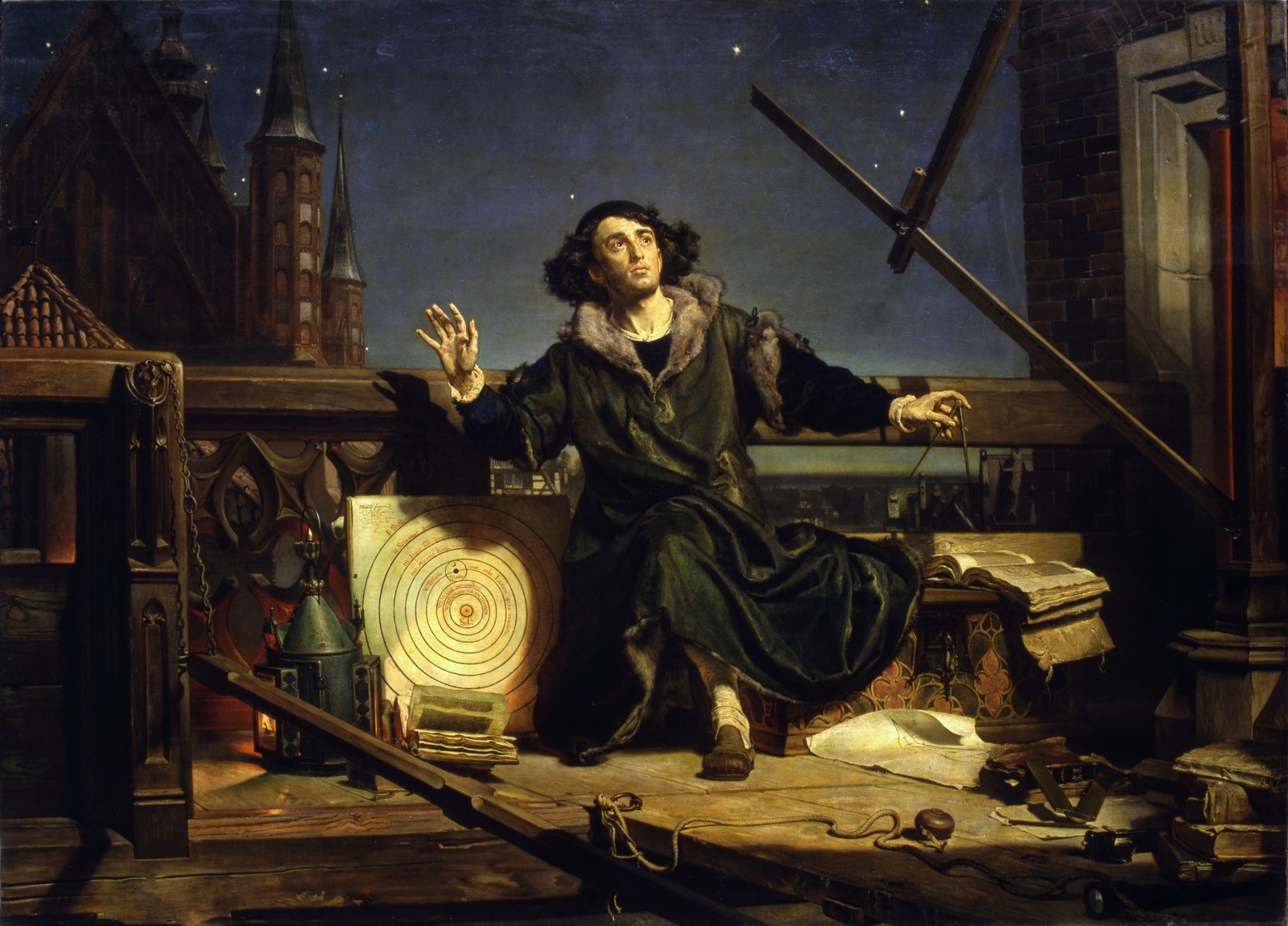
“Astronomer Copernicus, or Conversations with God”
👤 Jan Matejko📅 1873🖌️ Oil painting, 225 × 315 cm
An oil painting created for the 400th anniversary of the astronomer’s birth. It depicts Nicolaus Copernicus observing the sky from his private tower on the cathedral hill in Frombork. Matejko’s vision is, however, a myth: Copernicus conducted observations in the garden of his external canonry, on a specially levelled brick slab known as the pavimentum. The painting is held in the collections of the Jagiellonian University in Kraków.
Jan Matejko, “Astronomer Copernicus, or Conversations with God” (1873); Jagiellonian University in Kraków. Wikimedia Commons / public domain. Licence: public domain
Portrait
3D model · AR
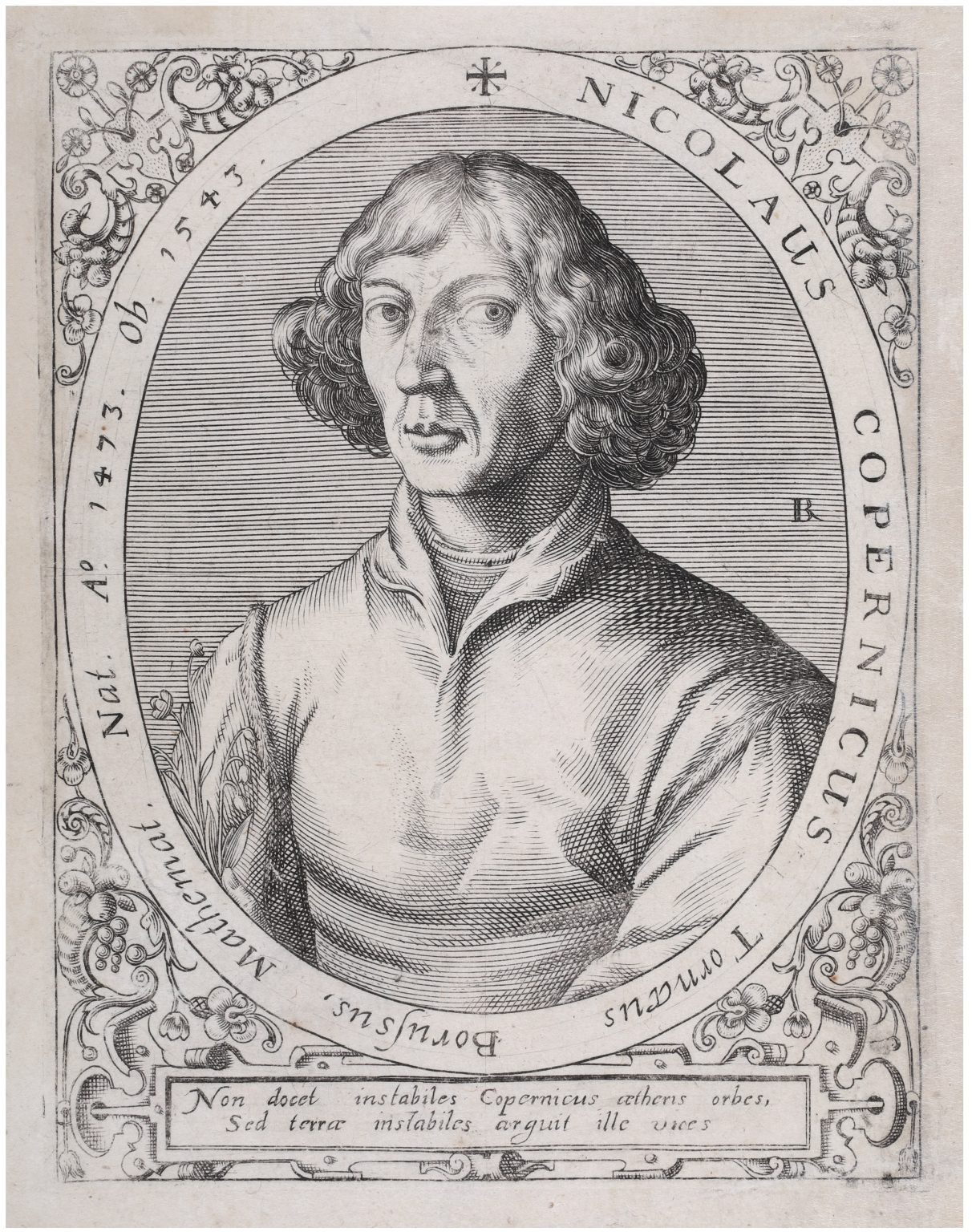
“Nicolaus Copernicus”
👤 Théodore de Bry📅 1597🖌️ Copper engraving, 13.9 × 10.8 cm
A copper engraving by the Flemish publisher and graphic artist Théodore de Bry (1528–1598). The portrait shows a bust of Copernicus within a decorative rectangular border with plant motifs. Around the oval frame appears the inscription: “NICOLAUS COPERNICUS Tornaeus Borussus, Mathemat. Nat. Ac. 1453. Ob. 1543”. Copernicus is shown en trois quarts, with his face turned to the right, holding a bouquet of lilies of the valley in his right hand. The engraving appeared in 1597 in Jean-Jacques Boissard’s work “Icones… virorum…”.
Théodore de Bry, “Nicolaus Copernicus” (1597), Frankfurt am Main. J.-J. Boissard, “Icones… virorum illustrium…”, part 3, Frankfurt 1597, p. 314, National Library of Poland, Polona. Licence: public domain
Portrait
3D model · AR
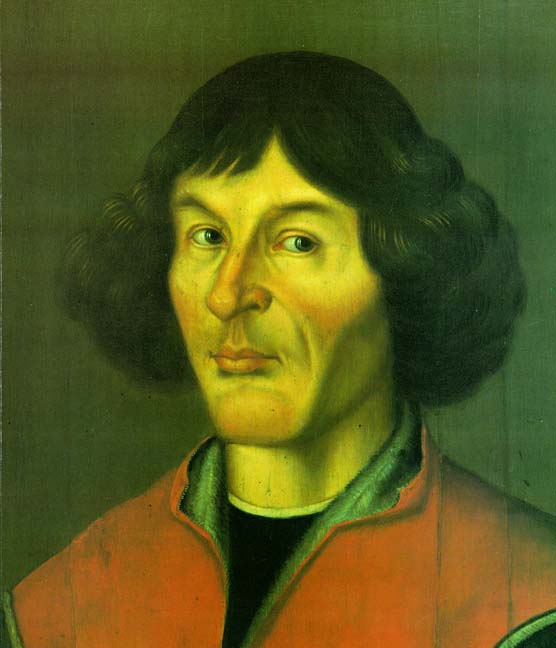
“Toruń Portrait” (“Gymnasium Portrait”)
👤 unknown author📅 second half of the 16th century (c. 1585)🖌️ Tempera with oil glazes on oak panel, 51 × 40.5 cm
The most famous and one of the oldest images of the astronomer, painted in tempera with oil glazes on an oak panel. According to Józef Flik, it was created around 1585 and originally measured about 57 × 77 cm; in the seventeenth century the edges of the painting were trimmed. It became an iconographic model for many later representations.
Old Town Hall in Toruń (District Museum). “Portrait of Nicolaus Copernicus” — Wikipedia / public domain. Licence: public domain
Portrait
3D model · AR
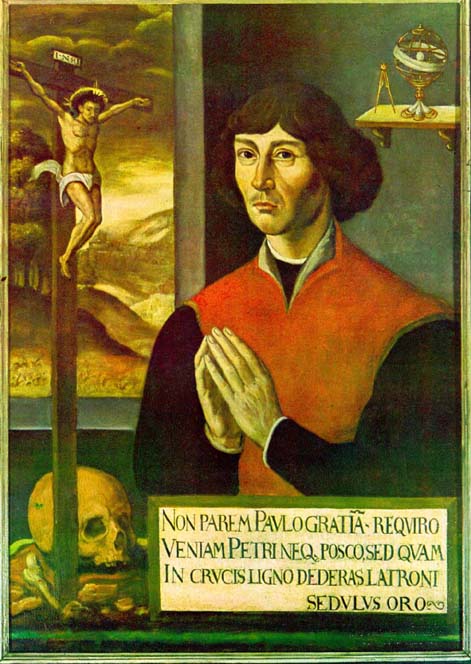
Portrait from the epitaph
👤 unknown author📅 c. 1580🖌️ Painting, epitaph
A portrait from the epitaph in the Cathedral Basilica of St John the Baptist and St John the Evangelist in Toruń, funded by the Toruń physician Melchior Pirnesius (1526–1589) to commemorate Copernicus as a physician. The painting was repainted several times. It shows the astronomer with hands folded in prayer; to the left, against a window, is a crucifix, below it a skull as a symbol of transience, and in the background on a small shelf are astronomical instruments: an astrolabe and a pair of compasses. At the bottom is a tablet with a Latin quatrain.
Cathedral Basilica of St John the Baptist and St John the Evangelist in Toruń. Wikipedia / public domain. Licence: public domain
Portrait
3D model · AR
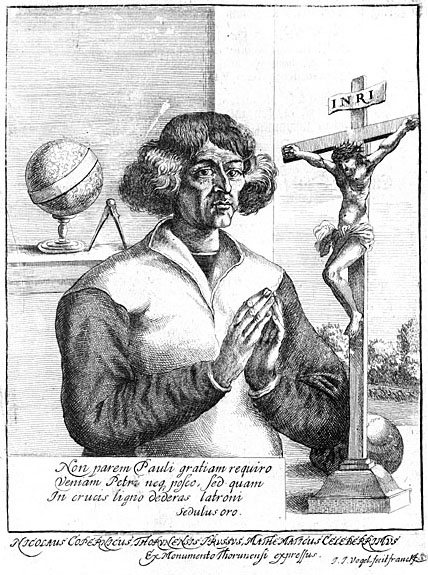
“Nicolaus Copernicus Thorunensis…”
👤 Johann Jakob Vogel📅 1684🖌️ Copper engraving
A black-and-white copy of the image from the cathedral in Toruń, as indicated by the inscription on the lower margin: “Ex Monumento Thorunensi expressus” (“Copied from the Toruń monument”). Vogel reproduced the Toruń epitaph fairly faithfully, giving the engraving a late-seventeenth-century aesthetic. In the lower right corner appears the signature: “J. J. Vogel sculp: francf.”.
J. J. Vogel, in: Ch. Hartknoch, “Alt- und Neues Preussen…”, Frankfurt and Leipzig 1684, p. 371. National Library of Poland, Polona. Licence: public domain
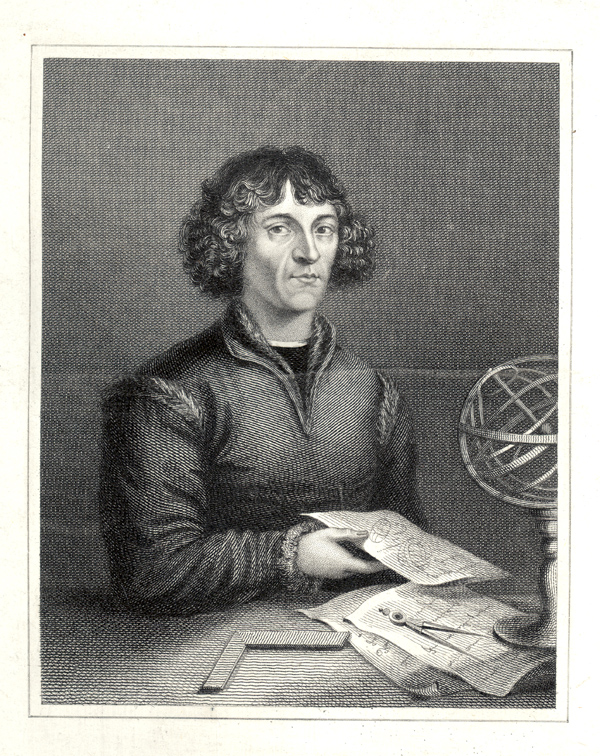
A steel engraving in a composition similar to Robert Cooper’s print, possibly its prototype or a variant of the same type. The astronomer sits at a table on which stands an armillary sphere, or spherical astrolabe; in front of him lie a pair of compasses and a set square, and in his left hand he holds a sheet of paper. The engraving is austere, high-contrast and sharply detailed. It was published in 1824 by the London firm Hodgson & Co.
“Nicholas Copernicus”, Hodgson & Co., London 1824, p. 248. wikioo.org / public domain. Licence: public domain
Portrait
3D model · AR
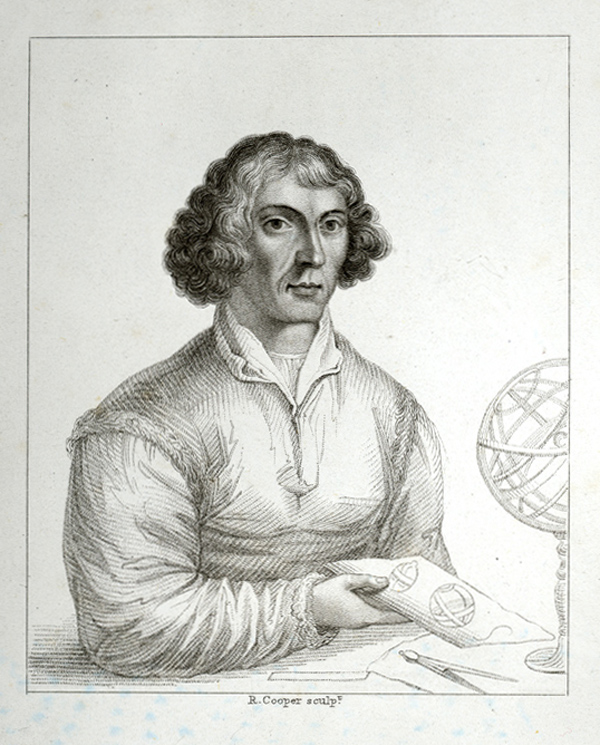
“Nicholas Copernicus”
👤 Robert Cooper📅 c. 1830🖌️ Lithograph
A work by the English engraver Robert Cooper (1795–1836). Copernicus sits at a table with an armillary sphere; in front of him is a pair of compasses, and in his left hand he holds a sheet of paper. The image refers to the earliest sixteenth-century woodcut representations of the astronomer, of the Tobias Stimmer type. Below the frame appears the inscription: “R. Cooper sculpsit”.
R. Cooper, “Nicholas Copernicus”, in: S. Butler, “Hudibras”, vol. 2, London 1859, p. 248. Wikisource / public domain. Licence: public domain
Portrait
3D model · AR
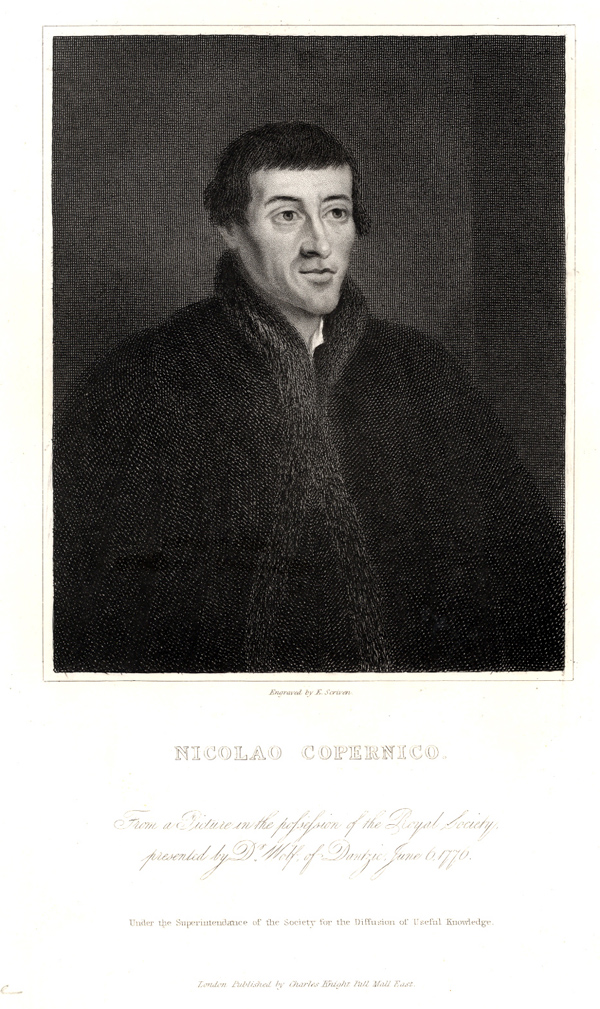
“Nicolao Copernico”
👤 Edward Scriven📅 1833🖌️ Copper engraving, 22.1 × 14.9 cm
A copper engraving by the English engraver Edward Scriven (1775–1841). It presents Copernicus as a mature man with an elongated face, prominent nose and strongly marked jawline. His short hair with a straight fringe differs from the idealised curls seen in other engravings. The figure wears a dark robe against a densely hatched background, giving the portrait an intimate, study-like character. The engraving was made after an oil painting from the collections of the Royal Society in London, donated by Dr Nathaniel M. Wolf of Gdańsk in 1776.
E. Scriven, “Nicolao Copernico”, in: “The Gallery of Portraits: with Memoirs”, vol. 1, London 1833. Wikimedia Commons. Licence: public domain
Portrait
3D model · AR
“Kopernik”
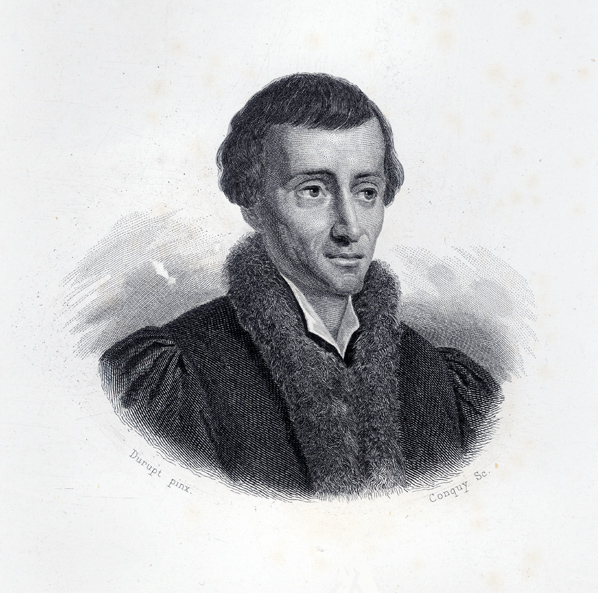
👤 Ephraim Conquy after Charles Durupt📅 c. 1830🖌️ Steel engraving, 21.6 × 13.7 cm
A steel engraving by the French illustrator Ephraim Conquy (1809–1843) after a painting by Charles Durupt (1804–1838). The bust has strongly marked cheekbones, a high forehead and deep folds around the mouth and eyes. The shorter, slightly tousled hair, as in Scriven’s work, differs from the hairstyle in many other engravings. It is an excellent example of French portrait graphic art of the Romantic period. At the bottom appear the inscriptions “Durupt pinx.” and “Conquy Sc.”.
E. Conquy, “Kopernik”, c. 1830. frombork.art.pl. Licence: public domain / frombork.art.pl
Portrait
3D model · AR
“Nicolo Copernico”
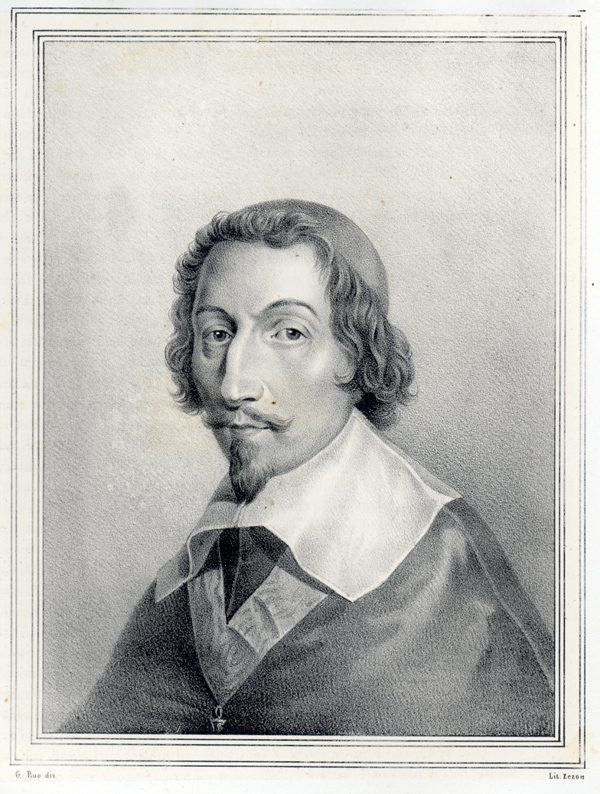
👤 Antonio Zezon after Gennaro Ruo📅 1835🖌️ Lithograph, 20.2 × 16 cm
A lithograph by Antonio Zezon (1803–1881) after a painting by Gennaro Ruo (1812–1884), a portrait questioned by researchers. It breaks with the tradition of the Frombork and Toruń portraits: it shows a man of southern European appearance, with a Spanish-style beard and curled moustache, wearing a skullcap and a broad ruff. Instead of a Renaissance astronomer, it presents a seventeenth-century Italian church hierarch. Signatures: “G. Ruo dis.” and “Lit. Zezon”.
A. Zezon, G. Ruo, “Nicolo Copernico”, Naples 1835. frombork.art.pl. Licence: public domain / frombork.art.pl
Portrait
3D model · AR
“Nicolaus Copernikus”
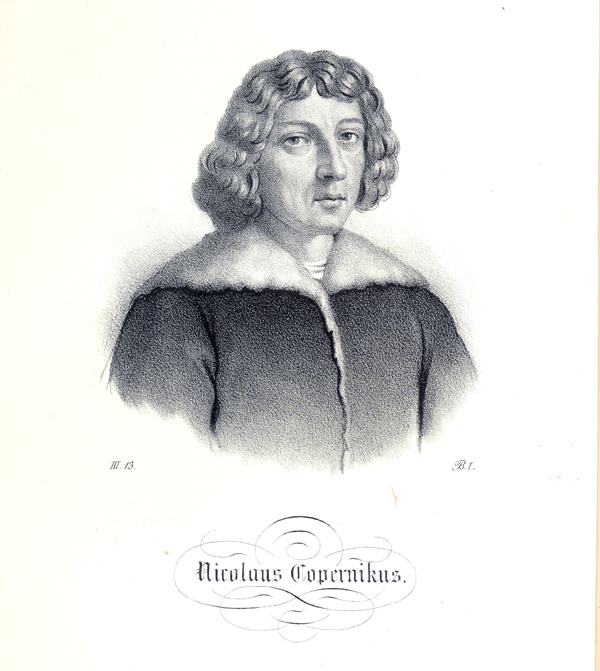
👤 Heinrich Wilhelm Teichgräber📅 1839🖌️ Lithograph
A lithograph by the German draughtsman H. W. Teichgräber (1805–1845). The bust is shown in three-quarter view, turned to the right, emerging directly from the whiteness of the paper, which focuses attention on the face and clothing. The face is calm and balanced, with a deep, somewhat nostalgic gaze. Signatures: “III. 13.” and the monogram “B.I.”, referring to Joseph Meyer’s Bibliographisches Institut.
H. W. Teichgräber, “Nicolaus Copernikus”. “Borussia: Museum für Preussische Vaterlandskunde”, Dresden 1842. National Library of Poland, Polona. Licence: public domain
Portrait
3D model · AR
“Copernic”
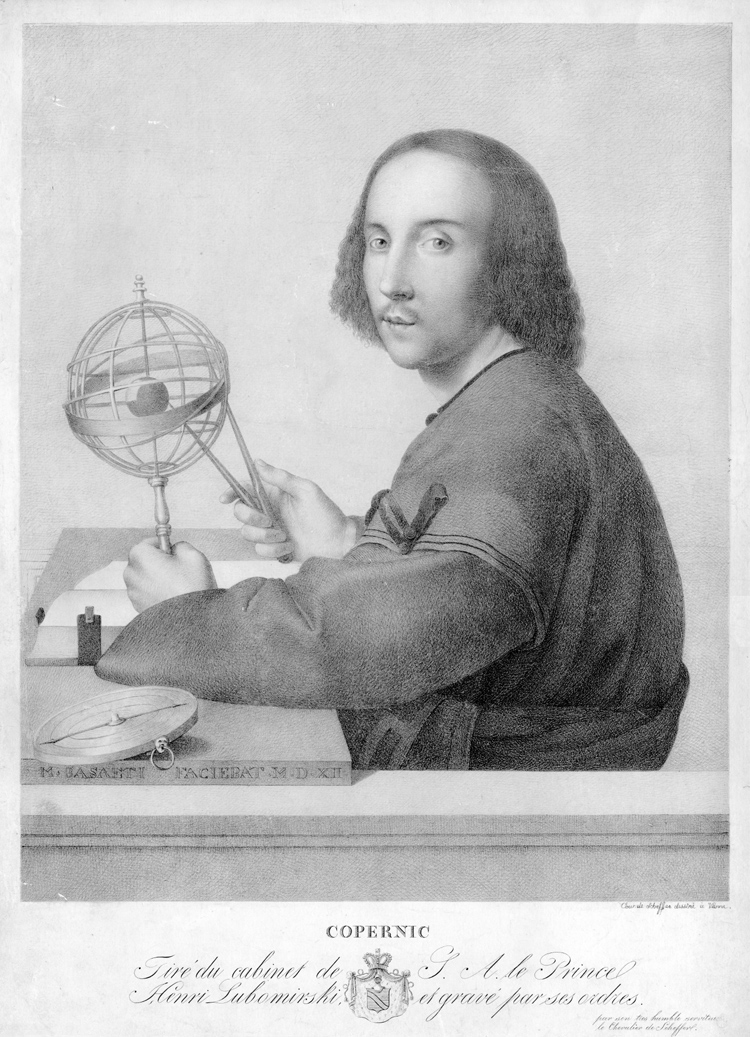
👤 Jean Baptist Scheffer📅 early 19th century🖌️ Lithograph, 42.5 × 34.5 cm
A lithograph by the Dutch painter and engraver J. B. Scheffer (1764–1809). The astronomer sits at a work table: in his right hand he holds an armillary sphere with a terrestrial globe, in his left a pair of compasses over an open book, while an astrolabe lies on the edge of the table. He is shown as a young man, almost boyish in appearance, with a delicate moustache and longer hair. The inscription “M. BASAITI FACIEBAT M·D·XII” suggests authorship of the original by Marco Basaiti (1512). Below the title is the Lubomirski coat of arms. The identification of the image as Copernicus has been questioned.
J. B. Scheffer, “Copernic”, Nicolaus Copernicus Museum in Frombork. National Library of Poland, Polona. Licence: public domain
Portrait
3D model · AR
“Copernicus”
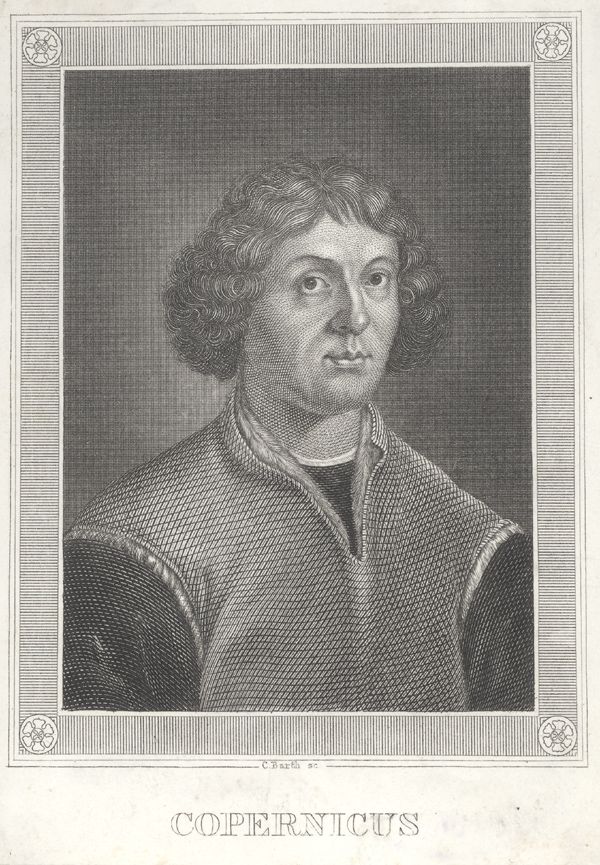
👤 Carl Barth📅 1855 (made before 1853)🖌️ Steel engraving, 19.7 × 12.2 cm
A steel engraving by the German engraver Carl Barth (1787–1853), published after the artist’s death. The bust is shown in three-quarter view, the head turned to the right, within a rectangular border filled with dense vertical hatching, with quatrefoil rosettes in the corners. Signature “C. Barth sc.” and below it the title “COPERNICUS”.
C. Barth, “Copernicus”, in: “Neues Conversations Lexicon”, Hildburghausen, supplementary vol. 2, 1855, p. 446. Wikimedia Commons. Licence: public domain
Portrait
3D model · AR
“Nicolaus Copernicus”
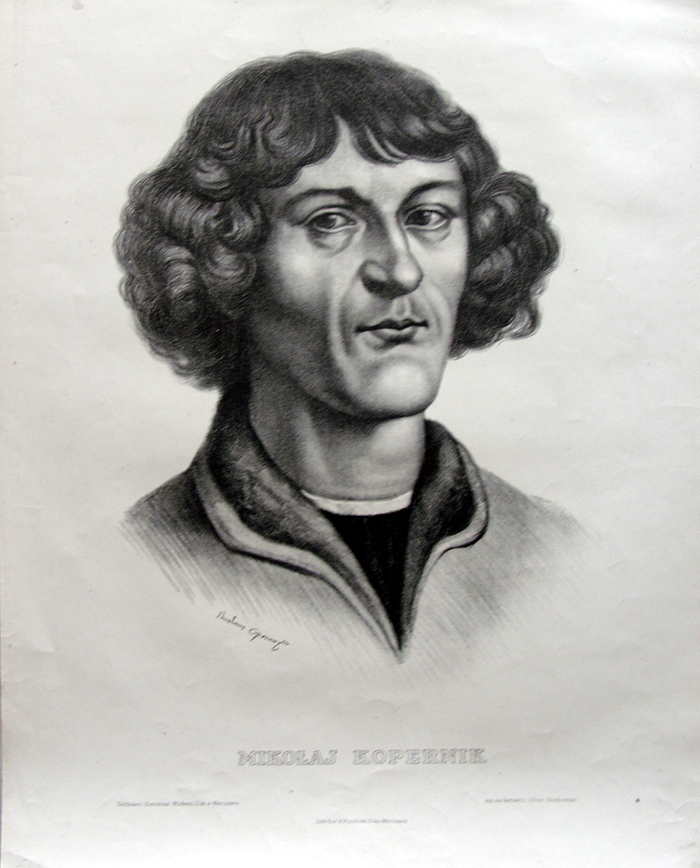
👤 Adam Grabowski📅 early 20th century🖌️ Lithograph
A lithograph by the painter and graphic artist Adam Grabowski (1875–1941), presenting a classic image of the astronomer with softer facial features. It was published by Hieronim Wilder and Co. in Warsaw.
“Nicolaus Copernicus”, published by Hieronim Wilder and Co., Warsaw. Wikimedia Commons. Licence: public domain
Portrait
3D model · AR
Nineteenth-century portrait of Copernicus
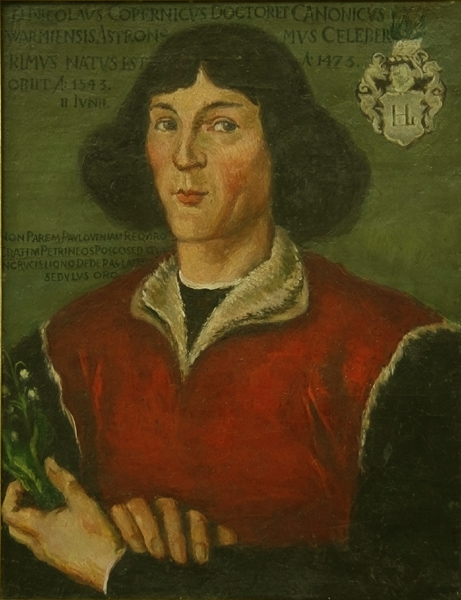
👤 unknown author📅 19th century🖌️ Painting / graphic work
A portrait by an unknown author. Copernicus holds a lily of the valley in his left hand. In the upper left corner there is a biographical note describing him as a doctor, Warmian canon and famous astronomer, with dates of life; the day of death, 2 June 1543, differs from the currently accepted date of 24 May. On the left is the text of a penitential poem by Aeneas Silvius Piccolomini, Pope Pius II. In the upper right corner is a stylised Baroque heraldic cartouche.
“Nicolaus Copernicus”, Nicolaus Copernicus Museum in Frombork. frombork.art.pl. Licence: public domain / frombork.art.pl
Portrait
3D model · AR
“Nicolaus Copernicus”
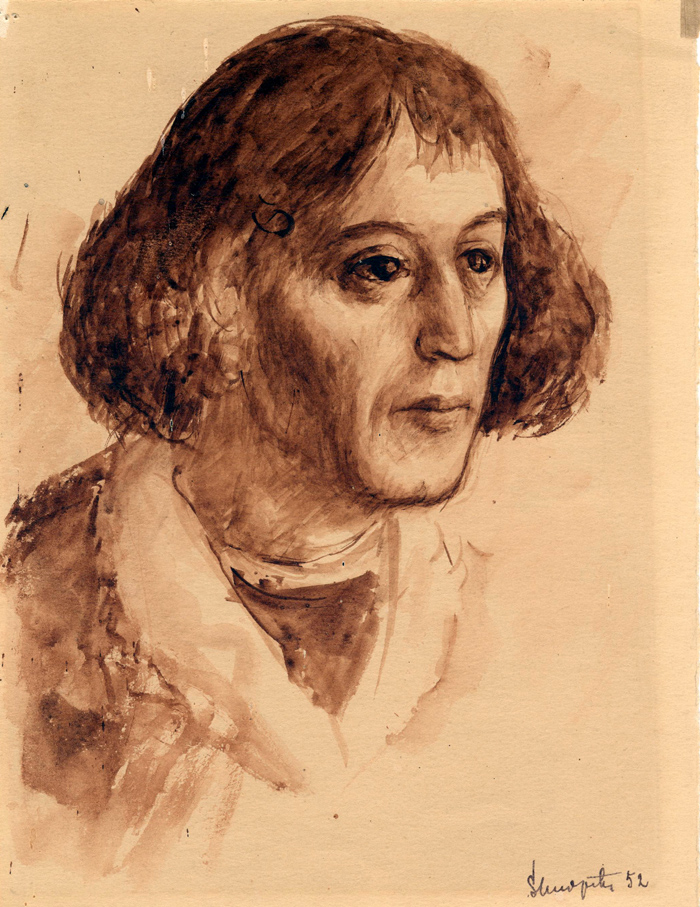
👤 Hieronim Skurpski📅 1952🖌️ Sepia drawing, 22 × 16 cm
A sepia drawing by Hieronim Skurpski (1914–2006). Although the artist often experimented with Cubism and Expression, this portrait refers directly to traditional iconographic representations of the astronomer: characteristic medium-length curly hair, distinctive facial features and Renaissance clothing with a collar.
“Nicolaus Copernicus”, Nicolaus Copernicus Museum in Frombork. frombork.art.pl. Licence: public domain / frombork.art.pl
Portrait
3D model · AR
“Kopernik”
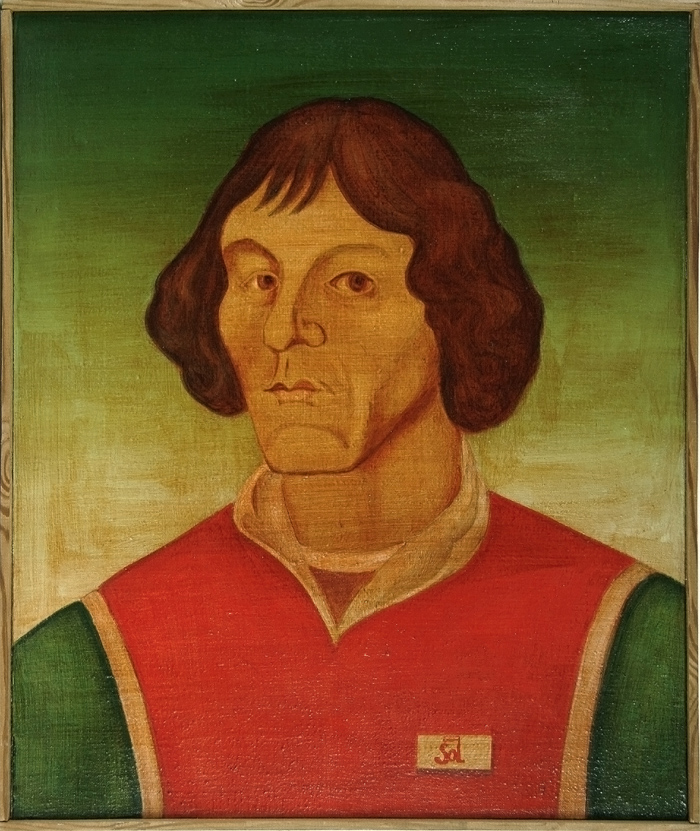
👤 Jan Lewdorowicz📅 1981🖌️ Oil on canvas, 60 × 50 cm
An oil painting by the painter and illustrator Jan Lewdorowicz, inspired by the “Toruń Portrait”. On Copernicus’s left breast the artist painted a badge with the inscription “Sol” (Sun), stylised as the Solidarność logo, placing the astronomer within the socio-political reality of Poland in the 1980s.
“Kopernik”, Nicolaus Copernicus Museum in Frombork. frombork.art.pl. Licence: public domain / frombork.art.pl
Portrait
3D model · AR
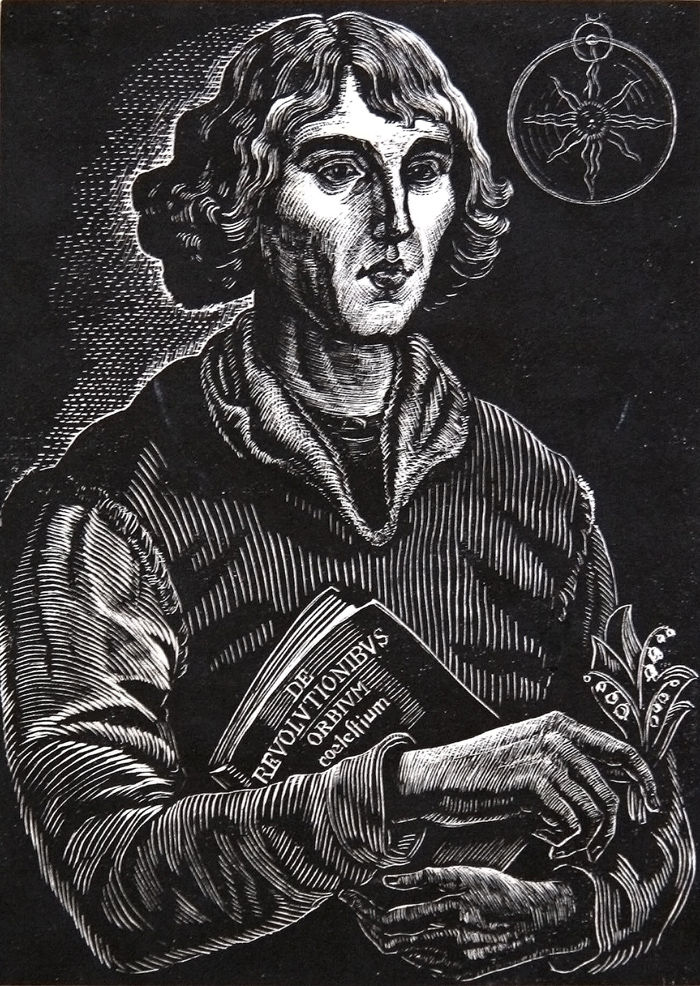
“Nicolaus Copernicus”
👤 Maria Łoś📅 1953🖌️ Woodcut, 21 × 15 cm
A woodcut by the painter, graphic artist and kilim textile designer Maria Łoś. The work was inspired by one of the oldest surviving portraits of the astronomer, published in the sixteenth-century volume “Icones…” by Nicolaus Reusner (1545–1602).
“Nicolaus Copernicus” (donated by the artist), Nicolaus Copernicus Museum in Frombork. frombork.art.pl. Licence: public domain / frombork.art.pl
How to launch AR view? (help)
Android
Tap the AR button next to a model. The phone will open Scene Viewer, where the model can be placed in real space.
iPhone / iPad
On iOS, AR view works through Quick Look. After tapping the AR button, the model opens in the system preview.
Desktop
On a desktop computer, you can rotate, zoom and inspect the 3D model without launching AR mode.
Common issues
If AR does not launch, check whether the browser is up to date, whether the device supports WebXR or Scene Viewer, and whether AR services are available.